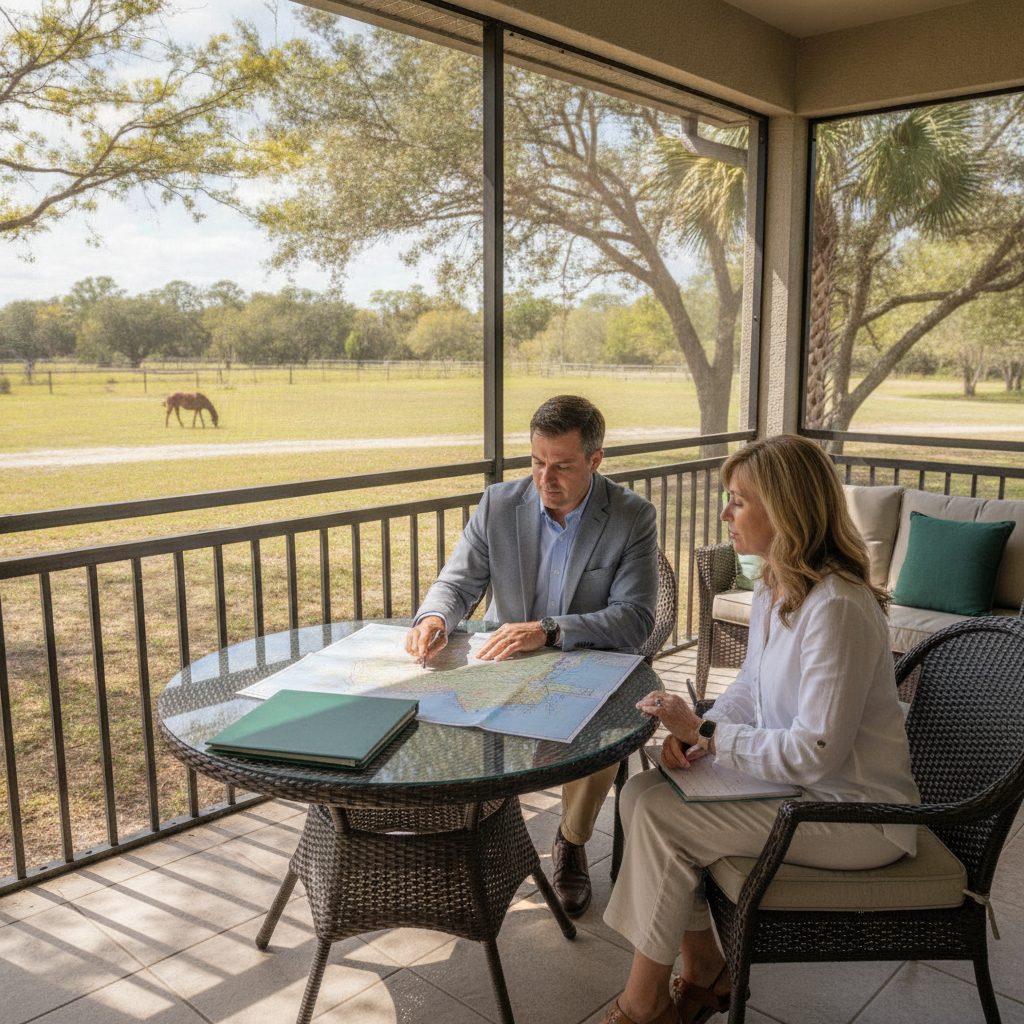
A judgment creditor in Florida does not treat the house you live in the way they treat a taxable brokerage account. Florida homestead creditor protection is the rule that your permanent home is a different asset: the limit is the land, not a dollar figure on the equity, and some claims still follow the property because they were always about the house itself. That is a different animal from the homestead tax break you file with the county, and it is not a blanket that makes every debt bounce off the front door.
The constitutional homestead and the acreage cap
Florida’s creditor analysis on a homestead is about the place. It is not a published dollar ceiling on what the house is worth. People mash this together with the tax exemption because both use the word homestead. The tax side is a county filing that trims assessed value. The creditor side asks whether this parcel is the owner’s permanent home, and how much land comes with it.
There is no dollar figure in that creditor test the way there is a dollar figure in the tax exemption. A paid-off house in Hunter’s Green and a mortgaged house in Meadow Pointe can both be homesteads if someone actually lives there as their permanent residence. The expensive house does not age out of the analysis because the price tag got large. The land-size line is what actually cuts it.
That is why a household that only remembers “Florida covers the home” gets a surprise on a large lot. The dwelling can still be the homestead. The extra acreage may not sit inside the same analysis. A creditor who cannot treat the home like other real estate may still have a fight over land that sits outside the cap. The state constitution is doing that work, not a county form, and not a planner’s slogan.
Florida has no state individual income tax, so “tax” in this corridor usually means the federal return and the property-tax bill. Property-tax homestead is real, and it is a separate track. The senior homestead exemption in Pasco County and Save Our Homes portability live on that tax track. Creditor protection is the other track. One can be in place while the household is still asking the wrong question about the other.
Who decides whether a given parcel qualifies is a Florida attorney reading the deed, the occupancy facts, and the survey. The advisors we match you with will not try a lawsuit. They will put the house next to the rest of the plan so “homestead” stops being one magic word.
Inside a municipality versus outside
Florida draws the land-size line differently inside city limits than it does outside them. The in-city line is the tight one. The out-of-city line is a much larger contiguous tract. The neighborhood’s marketing name does not settle it. The city limit on the parcel does.
That split is the local fact on this corridor. Temple Terrace is a city. Zephyrhills, Dade City, and San Antonio are cities. A lot inside those limits is measured against the smaller cap. Wesley Chapel’s master-planned streets can feel like a city and still sit in unincorporated Pasco. Seven Oaks, Meadow Pointe, Bexley, and Connerton addresses often live that way. Land O’ Lakes, Lutz, Odessa, and Shady Hills are the same kind of question: the sign at the entrance is not the municipality map.
East Pasco is where the acreage story gets real. A Shady Hills household on a few acres is not in the same posture as a Zephyrhills in-town lot. The house can be the homestead either way. The land around it is what an attorney actually measures. If the parcel is larger than the cap that applies to that location, the extra land is the part of the story that does not travel with the house.
New Tampa adds a second map. Hunter’s Green, Pebble Creek, and Tampa Palms sit in a different county line than Pasco, and some of those streets sit inside a municipality while the next block does not. A household five years out from a claiming decision, with three old employer plans and no will yet, still has to know where the parcel sits before anyone talks about “the homestead” as if it were one object.
Annexation and a survey that does not match the tax map are how this gets messy. The property appraiser’s map of the city line, and the acreage on the parcel, are the facts. Guessing from the HOA name is how people get the cap wrong. This brand does not read surveys. A Florida real-estate or homestead attorney does.
The dwelling itself, the garage, the pool, the lanai: those ride with the home when they sit on the land that qualifies. A second structure used as a rental, a vacant tract next door, or a lot across the street is a different analysis. Occupancy of this house as the permanent home is the hinge, not how many buildings share a roof color.
Occupancy, title, and whose house it is
Homestead creditor protection starts with a natural person occupying their own permanent home. A rental, a vacant investment lot, and a mountain house you visit in October are not this analysis. Intent matters, and so does actually living there. A long trip, a hospital stay, or a season somewhere else does not, by itself, turn the Pasco house into a former home if the plan was always to return. Moving out for good does.
Evidence of that intent is ordinary life, not a slogan. A Florida driver’s license, voter registration, the address on the federal return, and mail that actually comes here all speak to it. A declaration of domicile in Pasco County is one more piece of paper people use to show they meant this to be home. It is not the creditor shield by itself. The tax-exemption filing with the property appraiser is not the creditor shield either. That filing is the property-tax track.
Title can end the analysis before occupancy is even interesting. Homestead in this sense is built around a person and a home. Putting the house into an entity because someone called it a liability move can take the parcel out of that analysis entirely. Some living trusts are drafted so the occupant still has the right to live in the house. Some are not. The trust language is the fact, not the word trust on the cover. The trust versus will question in Florida is partly this: does the document still look like a person occupying a home, or does it look like something else.
Whose name is on the deed, and whether a spouse has to join a transfer, is homestead-and-family law. A lady bird deed, a co-owner who does not live there, and a house left to someone who is not a spouse or a minor child all change the picture at death. That is a third homestead idea, separate from creditors and from the tax exemption, and it is why estate planning coordination belongs in the same conversation as the deed. A beneficiary designation on an account can outrank a will. The house does not work like that account. The deed and the homestead rules do.
None of that is a DIY title change. Timing and intent are the whole fight if a creditor is already in the picture. Moving cash into a house, or moving a house into an entity, to get out of the way of a judgment is a question for a Florida attorney, not a sentence from a matching brand.
What homestead does not stop
Homestead creditor protection does not erase every claim that can touch a house. The debts that were always about the property sit in a different bucket from a general judgment that came out of some other fight.
A mortgage you signed is collateral on that house. Occupying it as a homestead does not make the loan disappear. Unpaid property taxes and assessments on the parcel follow the parcel. Work done on the house, the kind that becomes a claim against the property itself, is in that same family of “this was about the realty.” A federal claim can run on federal rules, which is a different conversation from a state-court judgment over a credit card or a medical bill.
Those last two are the debts people usually mean when they search this. A recorded civil judgment is not automatically a lien on a qualifying homestead the way it can be on other real estate. That is the useful core of the rule. It is also the sentence that gets over-read. A judgment already recorded before the house became your homestead, a house you do not live in, land over the size line, and title that no longer looks like a person’s home can all put the household back into a fight. Fraud, criminal proceeds, and a transfer made to hinder a creditor are not parlor tricks. They are facts an attorney has to look at.
Community association assessments, a contractor unpaid for work on this house, and the tax collector are not “random creditors.” They are claims tied to the property. Treating them as if they were a department-store card is how a household sleeps on a deadline that was always about the lot.
Selling the house changes the analysis too. The cash from a sale is not the house. Whether sale proceeds keep any homestead character if they are set aside to buy another permanent home is a fact-specific legal question, not a parking place for money. Do not assume the checking account inherited the shield because the closing check was large.
At death, homestead can keep estate creditors off the home in ways that do not apply to other assets, and it can also restrict who the house may go to when a spouse or a minor child survives. That restriction is easy to miss in a will that “leaves everything to the kids.” A lady bird deed in Pasco County and the will are not interchangeable on this point. The attorney who drafts the documents, and the planner who is looking at the rest of the balance sheet, need the same picture of the house.
The house versus the rest of the balance sheet
This search is about the house. A brokerage account, a rental in another county, and a vacation condo are not this analysis. Neither is a 401(k).
Retirement money runs on federal plan and IRA rules. A 401(k) rollover moves plan money under those rules, including the 60-day clock and the withholding that applies when a distribution is paid to you. It does not homestead the account, and it does not change how Florida treats the lot on Meadow Pointe. The IRS page on rollovers is the source for that clock. The house is not on it.
Required withdrawals are the same kind of split. The IRS says you generally have to start taking withdrawals from an IRA, SIMPLE IRA, SEP IRA, or retirement plan account when you reach age 73. The house has no such calendar. Mixing the two into one “asset protection” story is how a household delays an RMD while worrying about the wrong lien. Retirement income planning is the place the paycheck, the accounts, and the home get looked at as separate pillars that still have to feed the same month.
A Social Security claiming conversation is about a monthly benefit, a spouse’s record, and whether anyone is still working. Figures for claiming ages live at ssa.gov, not in a homestead pamphlet. Claiming later or earlier does not put a lien on the lot, and it does not take one off.
Before any of that gets shared with a planner, the household can read the advisor’s public record on BrokerCheck and IAPD. The brand matches you with independent licensed planners. It does not try lawsuits, hold title, or manage the house.
Does homestead exemption in Florida give protection from creditors?
The tax exemption and the creditor rule both get called homestead, and they are not the same filing. The tax exemption is a county application that reduces assessed value. Creditor protection is a separate analysis of whether this parcel is your permanent home, how much land it includes, and whose name is on the deed. Filing for the tax break does not, by itself, create the creditor rule, and skipping the tax filing does not automatically mean a judgment creditor can treat the house like other real estate.
Can a creditor put a lien on a Florida homestead?
Some claims were always about the house: the mortgage you signed, the tax bill on the parcel, work done on the property. A general civil judgment from some other fight is the case people mean when they ask this, and a qualifying homestead is not treated like other real estate for that kind of judgment. Land over the size line, a house you do not occupy as home, title in an entity, and a federal claim are the usual reasons that sentence stops being the whole story. A Florida attorney reads the recorded document and the survey. This brand does not.
What assets does Florida homestead creditor protection actually cover?
It covers the home you occupy as your permanent residence, on the land that fits the size line for that location, in a form of title that still looks like a person and a home. It does not cover every asset a creditor might reach. Accounts, rentals, and a second house are different rules. Retirement accounts follow federal distribution rules, not the homestead map.
When to call us
A judgment in the mail, a title change, a lot that may sit over the land-size line, or a house that has to be coordinated with retirement accounts and a will is worth taking to a fiduciary advisor and to a Florida attorney rather than sorting from memory. The advisors we match you with will walk through how the house sits next to income, rollovers, and claiming decisions. They will not give legal advice on the deed. Call us at (813) 680-3195.